
troi turns the offer into the plan
Phases, roles and effort from the costing become the project's budget, its tasks and the people planned on it.
Functions in troi ai·onFunctions in troi five
Time TrackingProject EstimationTask ManagementResource PlanningReporting & ControllingDigital Receipt CaptureIntegrations & APIsProduct overviewProduct
Compare both generationsProduct
Offers, projects, time, budgets, invoicing and reporting are one flow, not six tools with an integration between them.
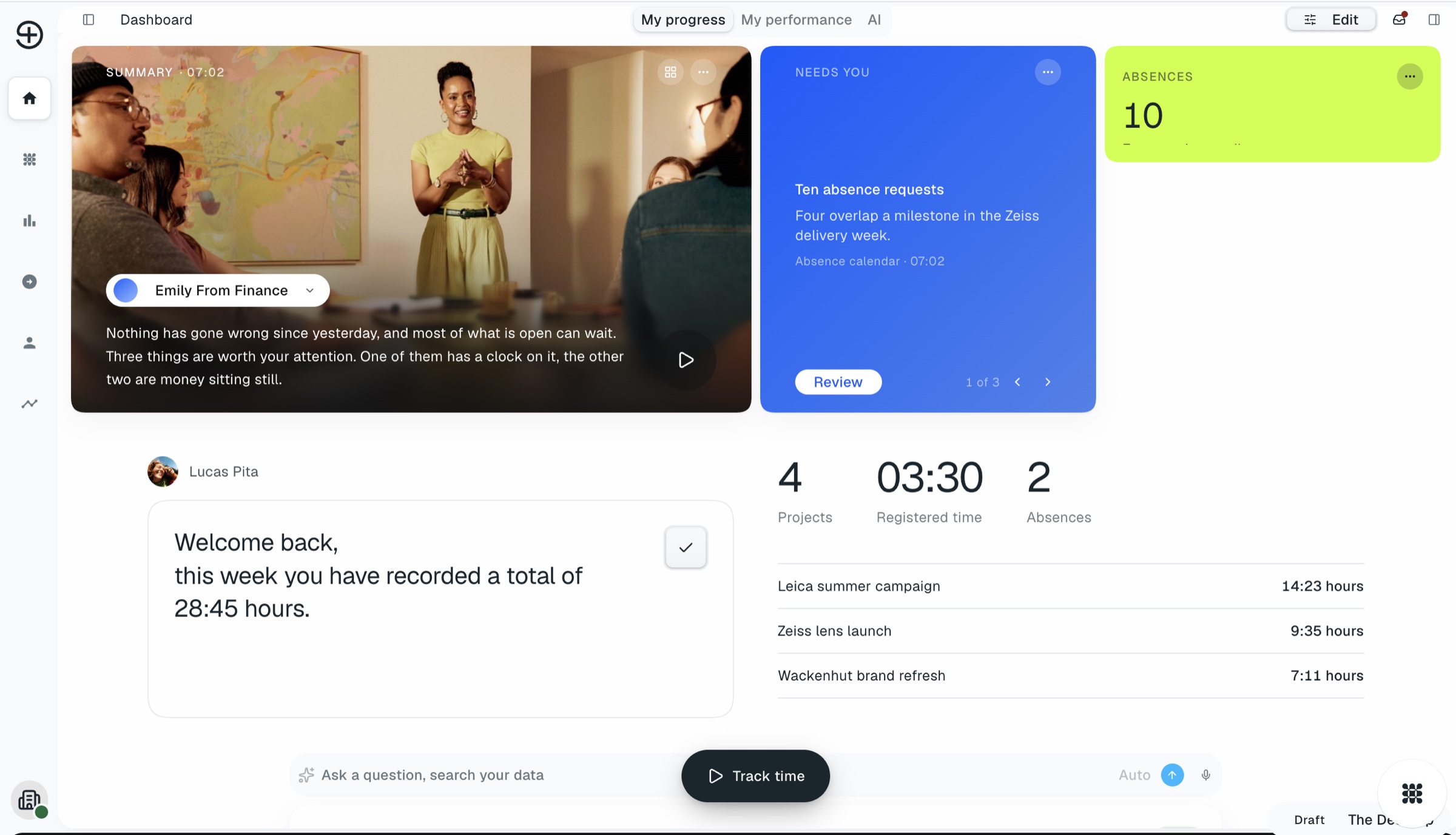
troi drafts the work as it happens, holds every project against its plan and brings agents to the steps in between. Time tracking, project estimation, task management, resource planning, reporting and controlling, digital receipt capture and integrations share one record, so an hour, a receipt or an offer is entered once.
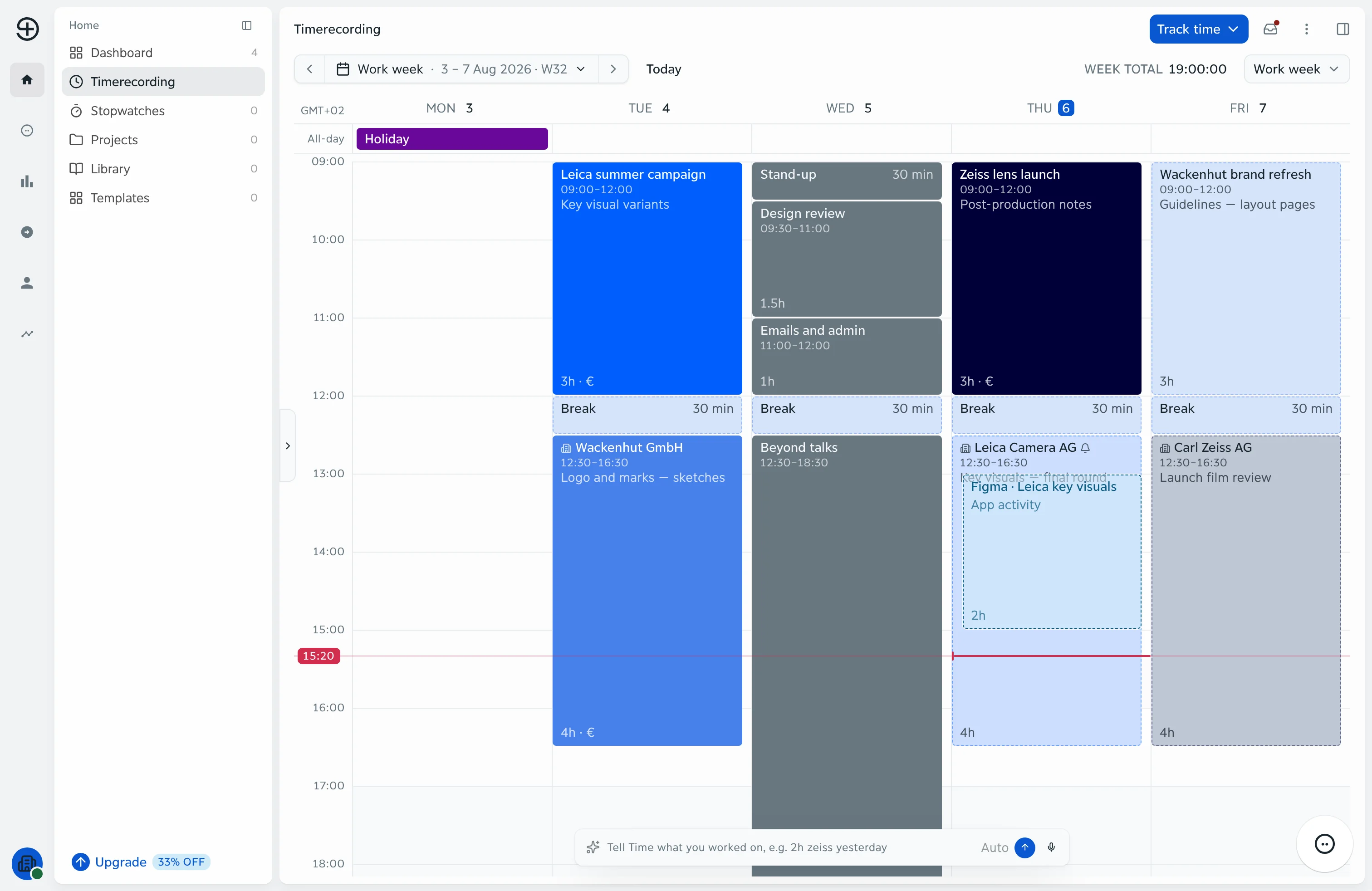
The week arrives drafted from the calendar, the timer and the apps you worked in. Nothing is booked until you keep it.
Recorded hours are measured against planned effort and the week's target, so a gap shows while there is still time to act.
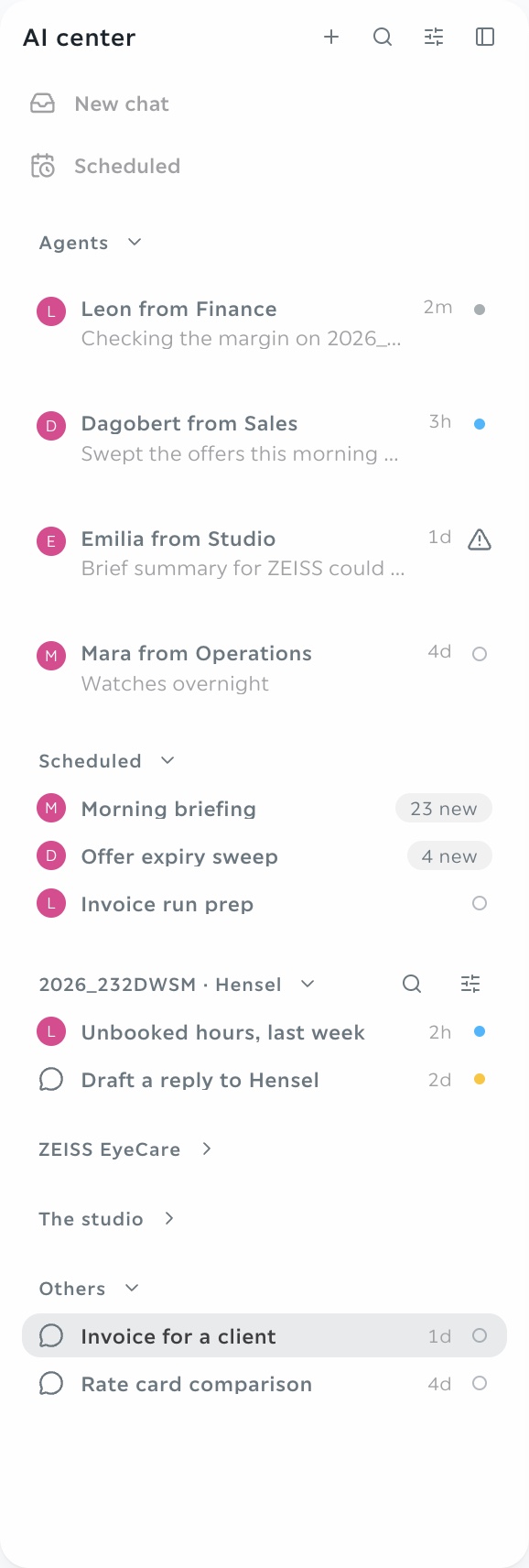
Agents take on the handovers, the chasing and the re-entering. Nothing commits silently, and no agent assigns work to a person.
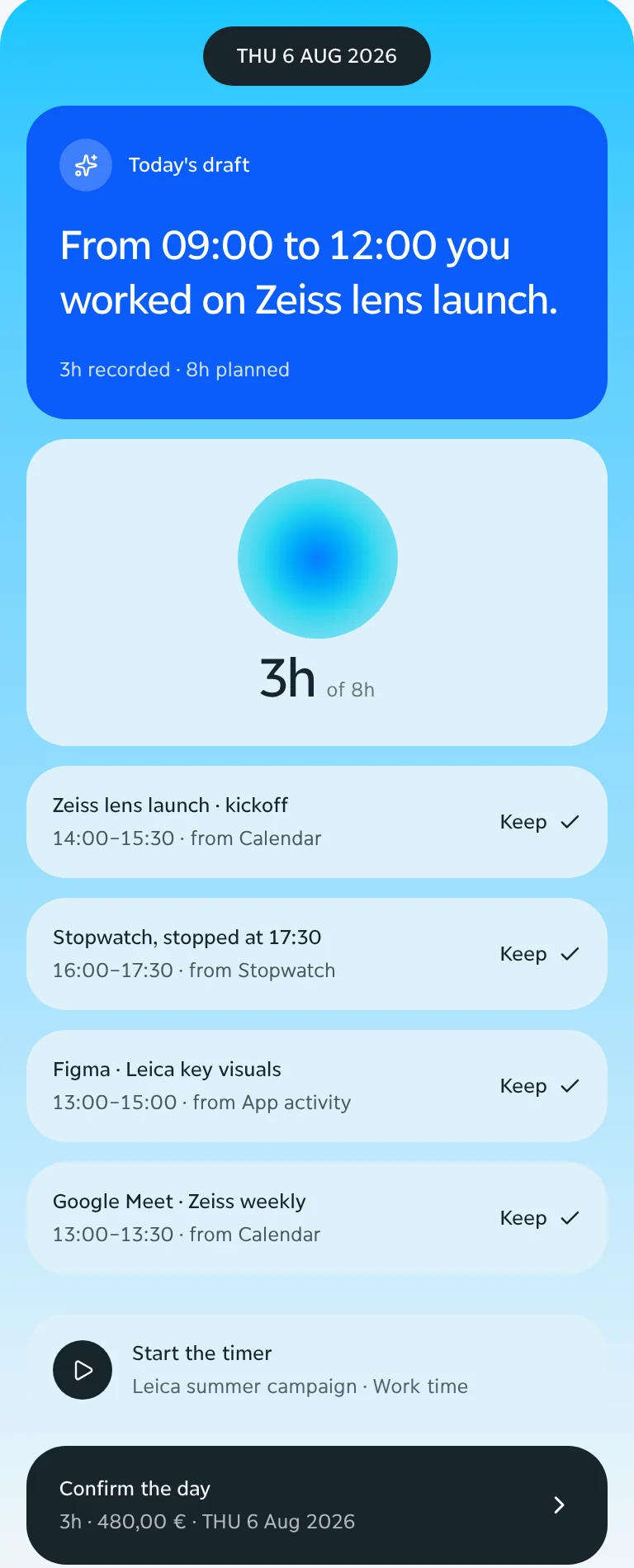
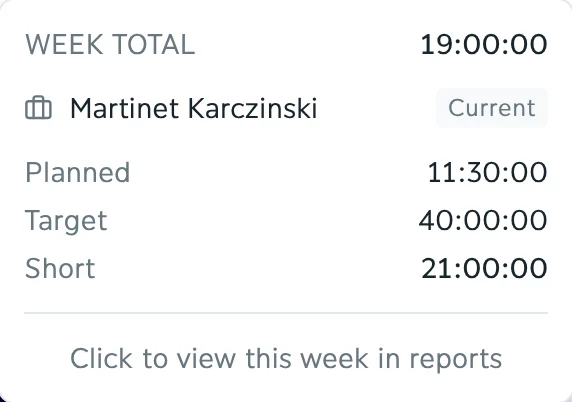
Every hour sits on a project and a line item, beside the week's total and its target.
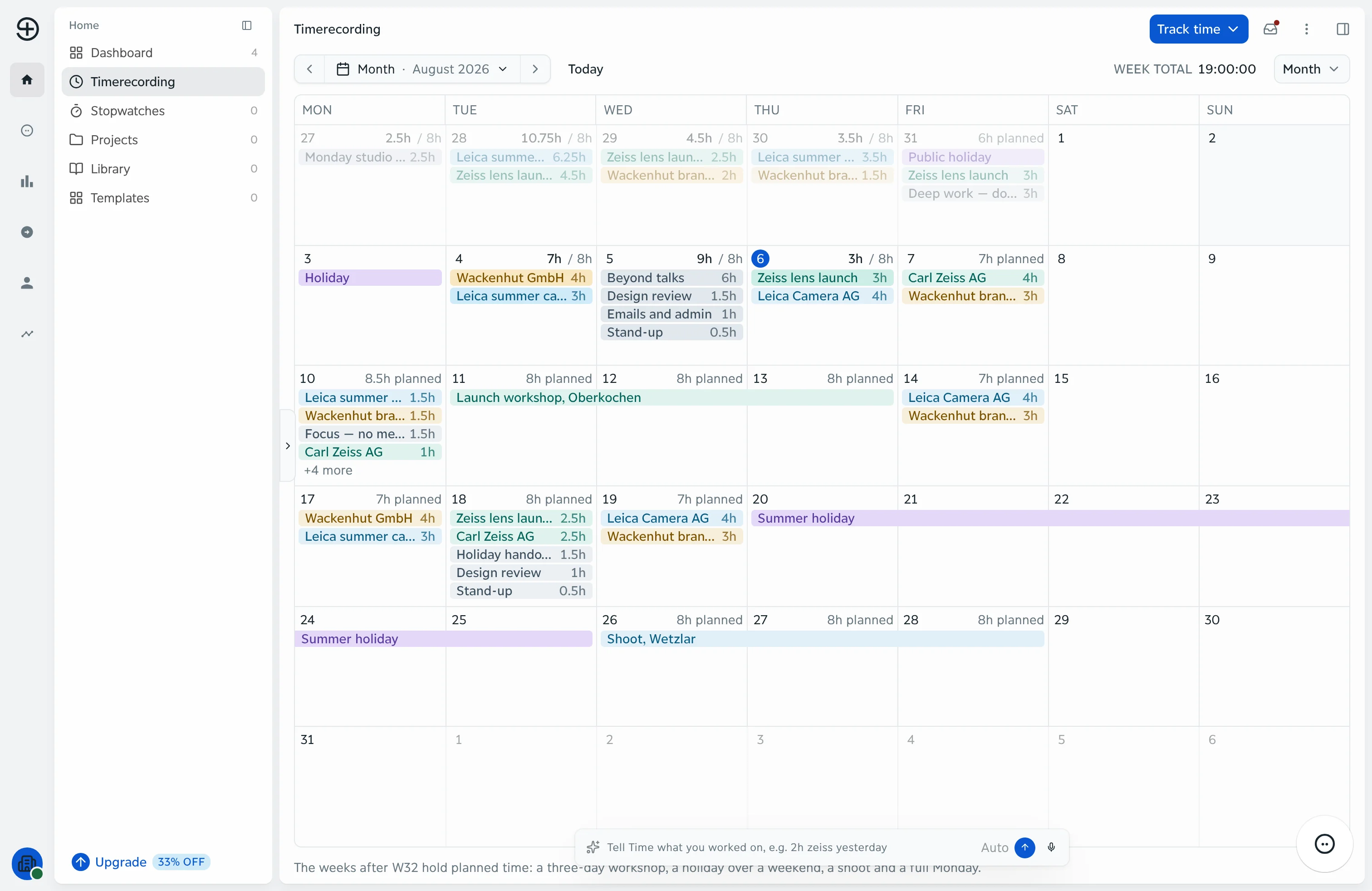
Planned time, holidays and shoots sit in the month beside what was recorded, so capacity shows before it runs out.
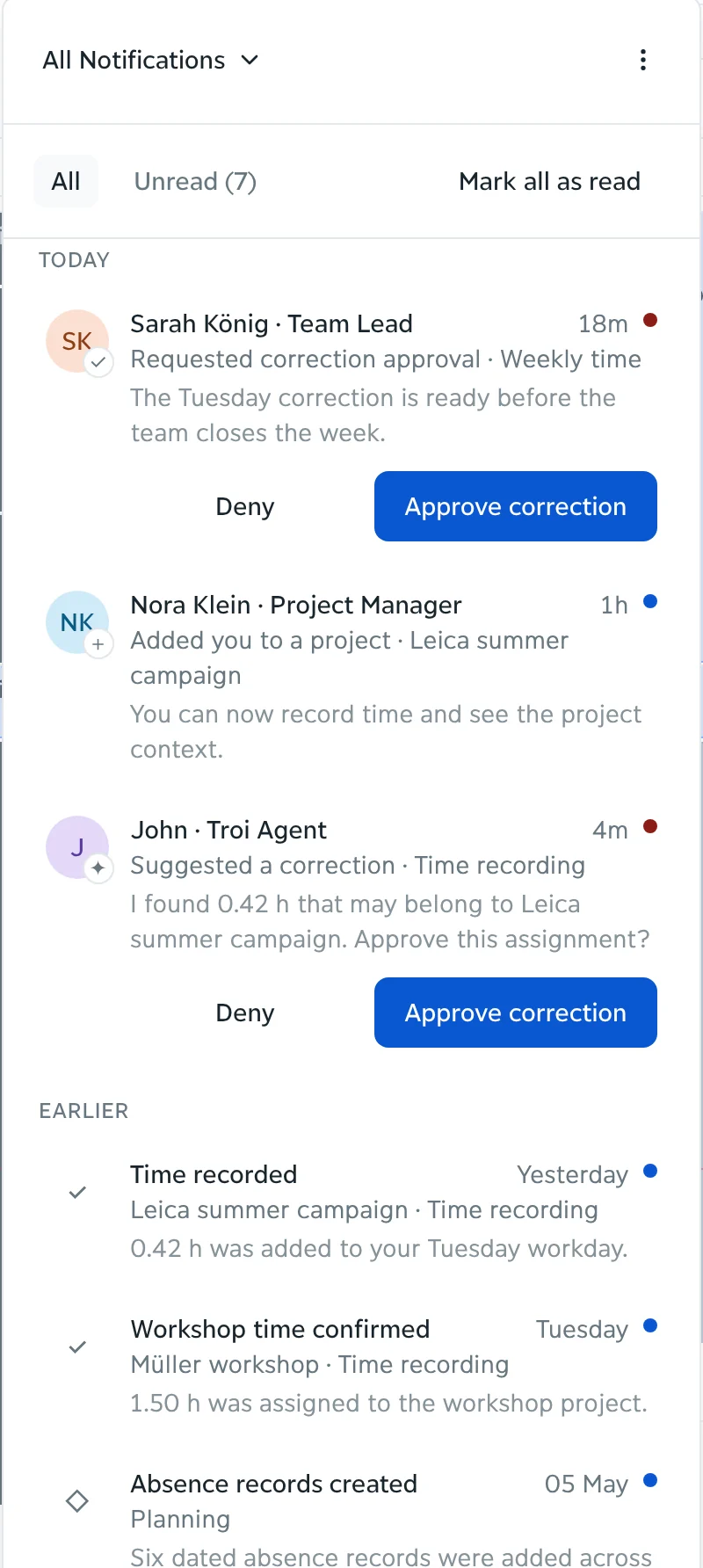
Corrections, approvals and the agent's suggestions arrive in one place, each with Approve and Deny.
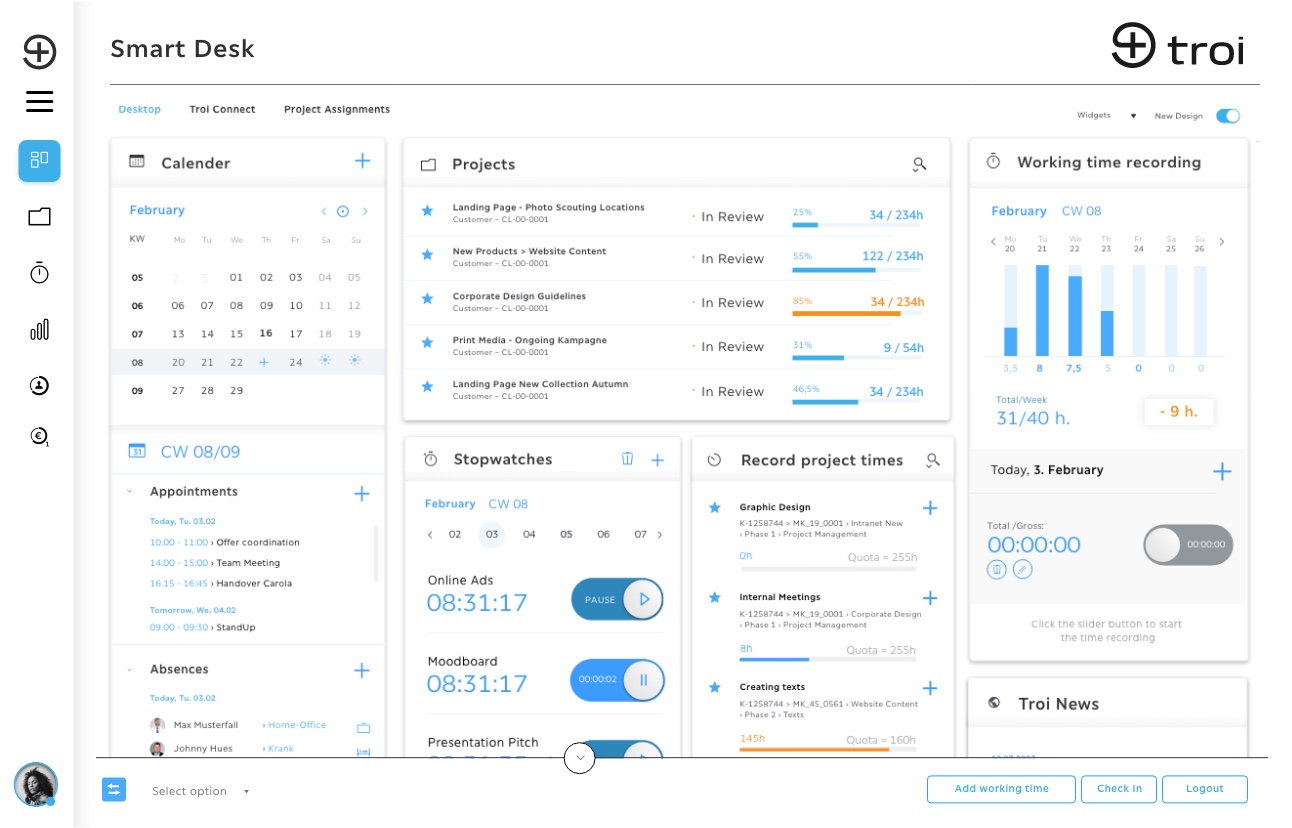
The Smart Desk puts calendar, projects, stopwatches and working time on one screen, for teams that stay with troi five.

When the offer, the hours, the budget and the invoice live in separate places, the margin shows only after the project has closed. In troi they share one record, so it shows while the project runs. Hours, receipts and offers are entered once, with no second entry.
How it works
Phases, roles and effort from the costing become the project's budget, its tasks and the people planned on it.
Hours arrive drafted in the timesheet and receipts are captured digitally. You keep, correct or dismiss them.
Billable hours reach the invoice with their rates, the export goes to accounting, and each project shows against its plan.
Hours recorded in the task, measured against the plan and handed to invoicing.
Quotes built from your own price list, with totals and margin as you type.
Quotes built from your price list, with hour proposals from the Smart Calculation module.
Tasks that carry their hours from the quote.
Who is free and who is full, person by person.
Working hours and overtime, with budget and margin in higher plans.
Budget, utilization, revenue and margin as the hours arrive.
Receipts uploaded, filed against costs and exported for DATEV.
Receipts filed with their image, assigned to a project and exported for DATEV.
Outlook, Google, DATEV and Personio connected to troi.
DATEV, Exchange, Jira, Asana, Personio and the troi API.
An example
On Tuesday the timer recorded three hours of key visual variants, billable at €145 an hour. On Thursday troi saw two more hours in Figma and drafted them. Rebuilt from memory on Friday, the invoice shows €435. Kept in troi, it shows €725, and the report shows the same hours against the plan.
Both generations run the same loop: quote, deliver, record, settle. What differs is how much of each step is done by hand. In troi five entries, assignments and calculations are made by the person. In troi ai·on they are proposed from the work and from finished projects, and then confirmed.
| troi five | troi ai·on | |
|---|---|---|
| Recording an hour | Entered in the task, the weekly timesheet or the calendar view | Also described by text or by voice |
| Assigning the entry | Chosen from project and line item | Proposed from the work context, you confirm or correct |
| Missing entries | Found when the week is reviewed | Reported while the week is still open |
| Building a quote | Line items and hours entered by hand | Drafted from comparable finished projects |
| Hours per line | Estimated by the person quoting | Proposed per line, accepted or corrected one by one |
| Starting a project | Set up from the accepted quote by hand | Created from the accepted quote, with the team scheduled against capacity |
| Asking a question of the data | Reports read and filtered | Asked in a sentence, by text or by voice |
| Everything else | Identical | Identical |
troi five remains available and in active development. Moving to troi ai·on is a decision, not a requirement.

01 · One recordNo second entry
03 · By phaseThe plan meets the work
04 · The next offer
Time tracking, project estimation, task management, resource planning, reporting and controlling, digital receipt capture, and integrations and APIs. They share one record, so an hour, a receipt or an offer is entered once.
In the EU, in Austria, with troi's hosting partner Digimagical on 100 percent green electricity. troi is ISO/IEC 27001 certified and GDPR compliant.
Yes. Invoices go out in the ZUGFeRD and XRechnung formats, the export to accounting is DATEV compliant, and documents are filed in a GoBD-compliant way.
Yes. The integrations and APIs connect the calendar that fuels the timesheet and the ledger the invoices land in.
troi drafts entries, proposes the project and line item, and shows what needs attention. Nothing commits silently, and no agent assigns work to a person.
Core is available now, from €9.95 a month. Intelligence, Performance and Enterprise follow, each with everything before it.
See pricing