
troi aggregates from the work
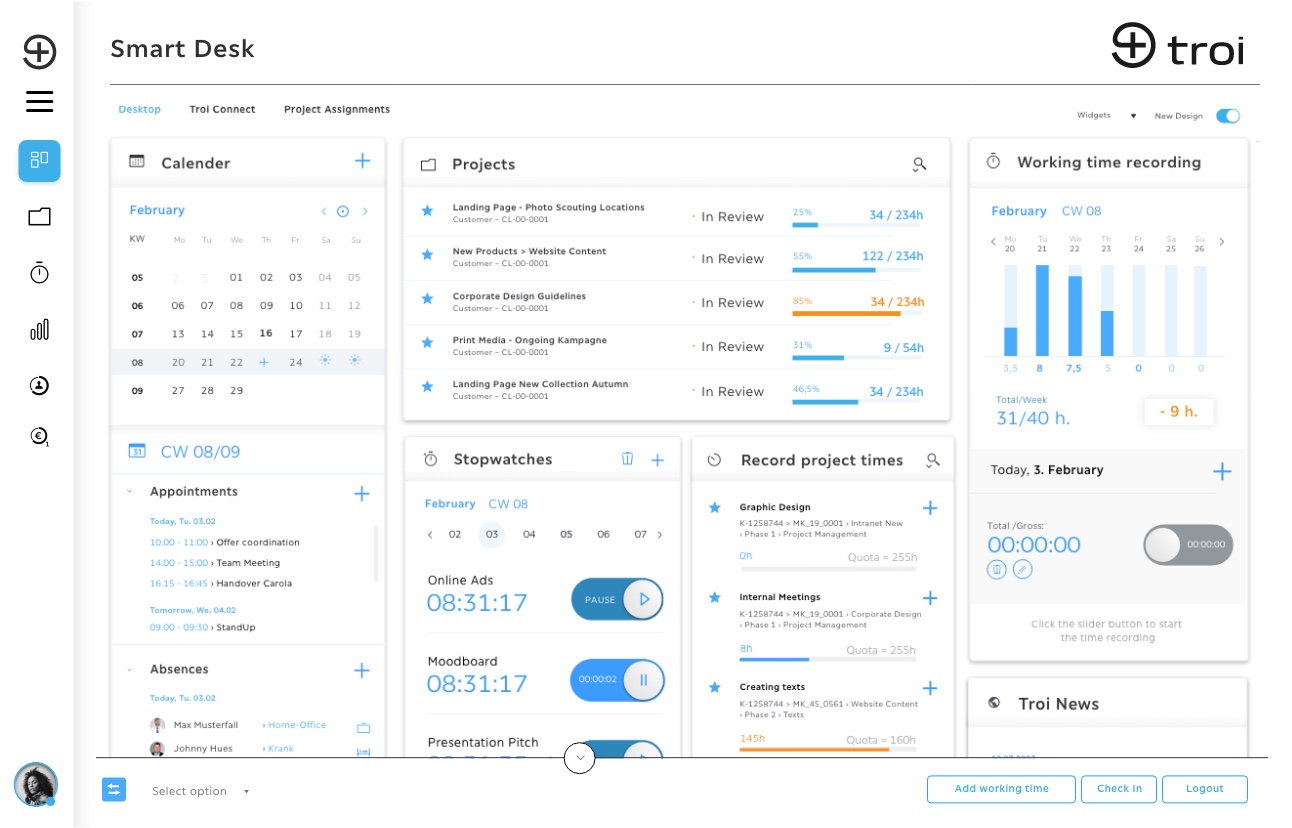
Every hour recorded in time tracking, every booked cost and every invoice rolls up from the project to the client, the service line and the company.
Functions in troi ai·onFunctions in troi five
Time TrackingProject EstimationTask ManagementResource PlanningReporting & ControllingDigital Receipt CaptureIntegrations & APIsProduct overviewRoles
troi shows which clients earn, which services carry themselves and whether the next quarter fits the team you have.
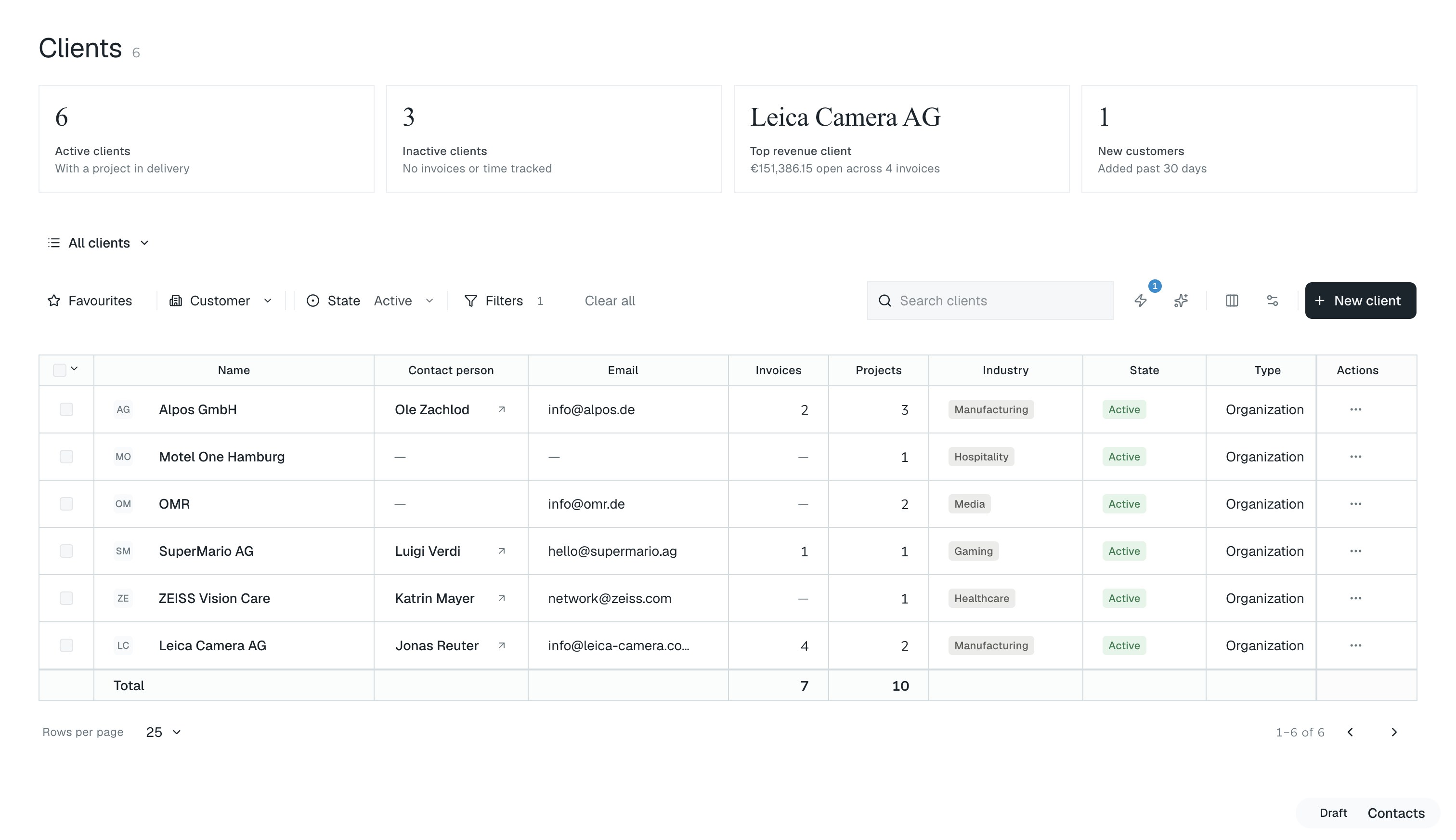
At company level the question is not whether a phase is late. It is which clients are worth keeping, which services carry themselves, and whether the work coming in fits the people available. troi answers all three from the same records the projects run on.
Revenue, contribution and margin per client and per service, over any period, out of reporting and controlling.
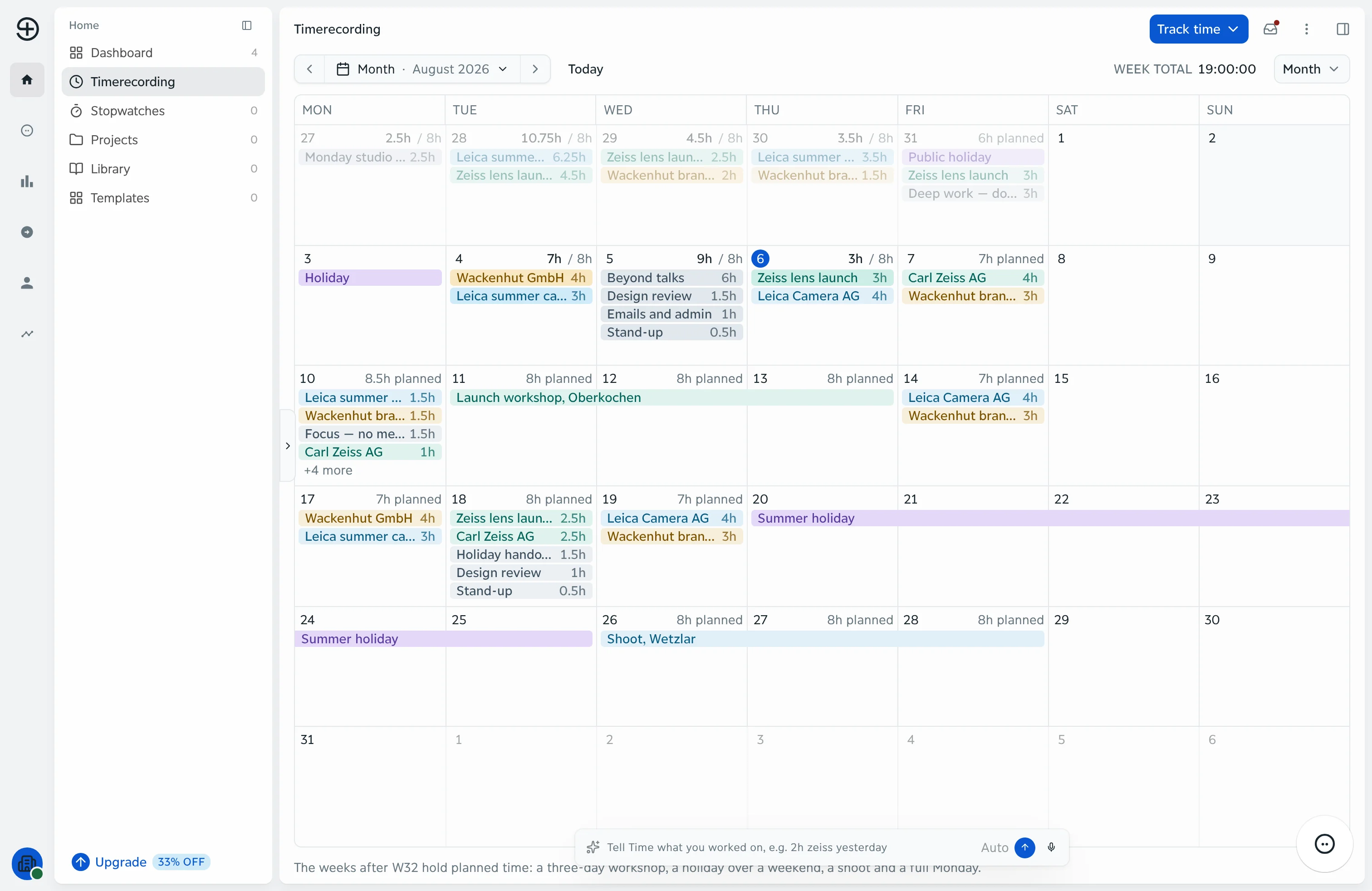
Committed work against available capacity from resource planning, before a decision to hire or to decline.
What comparable projects really cost against what project estimation quoted them at, by service line.
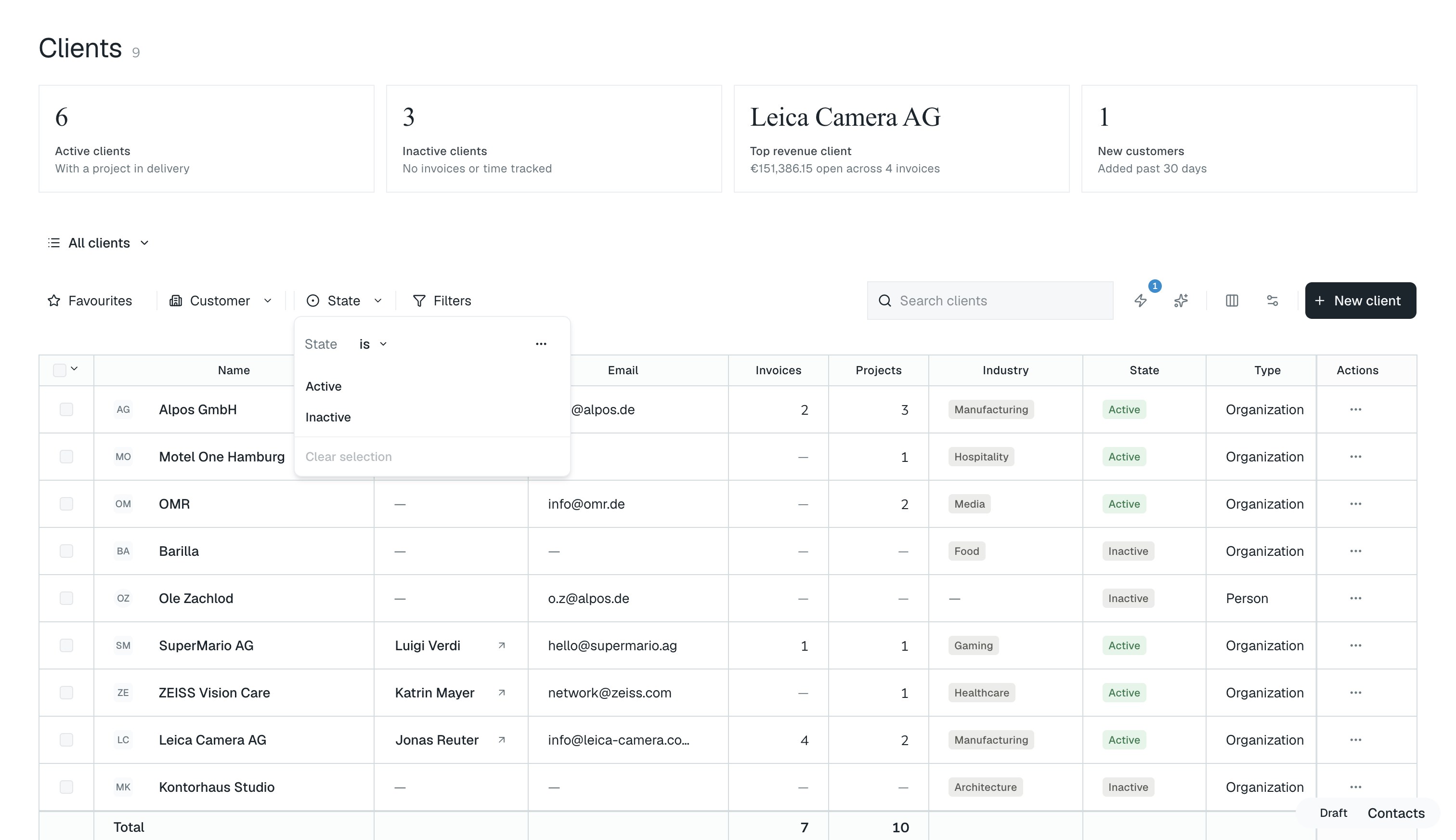
Revenue and margin per client, including the ones that take more than they return.
Which service lines carry themselves, and which are quietly subsidized by the others.
Billable share per period, as a trend rather than a snapshot.
Committed work against capacity, and where the next gap or the next peak sits.
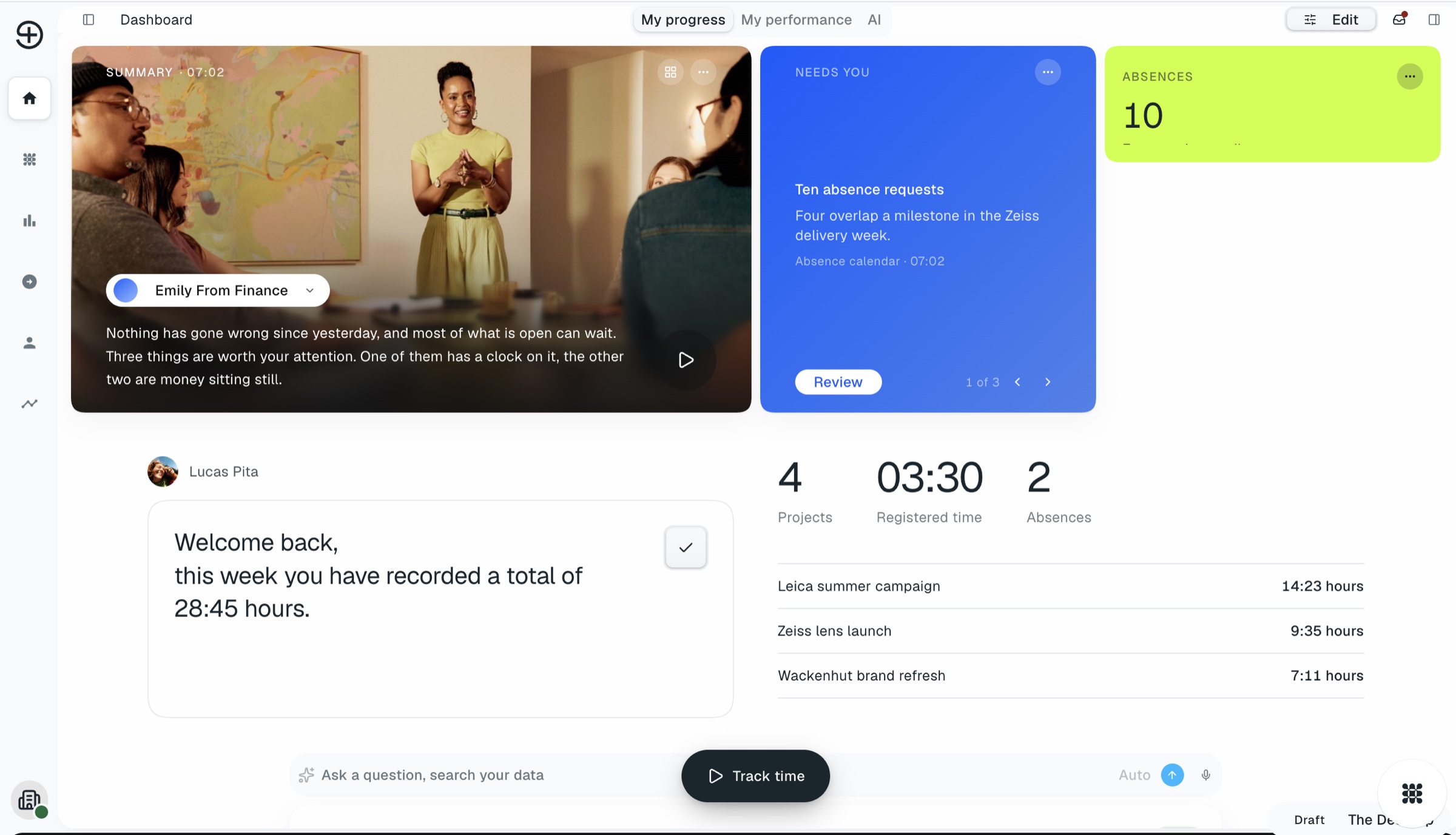
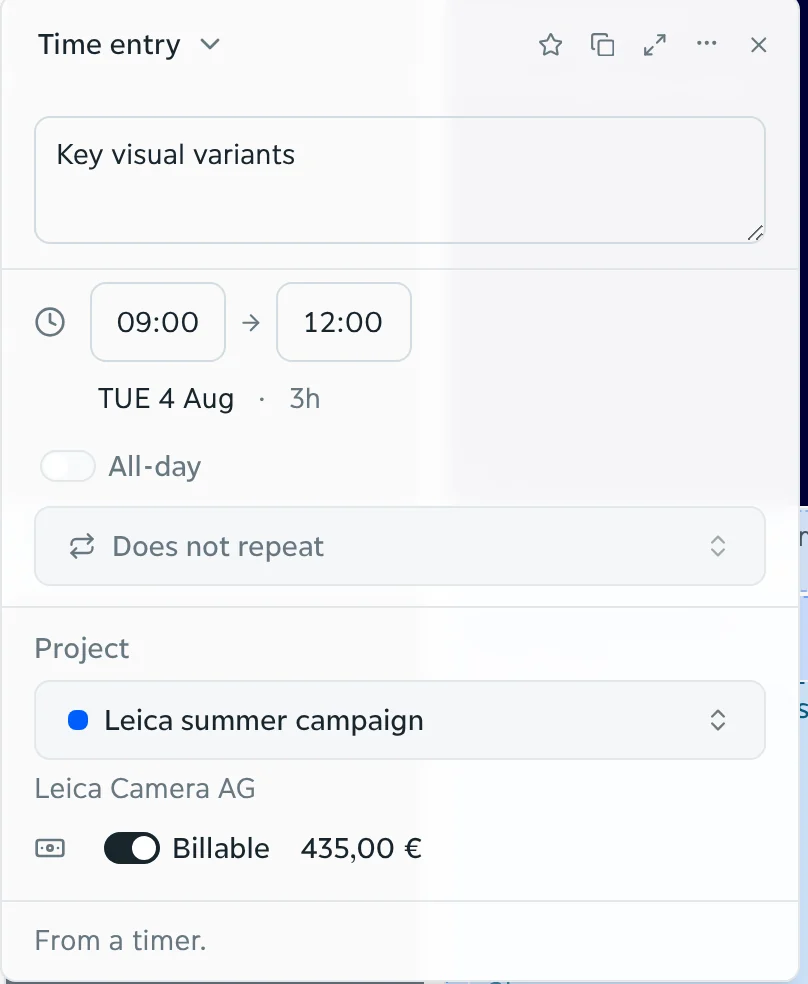
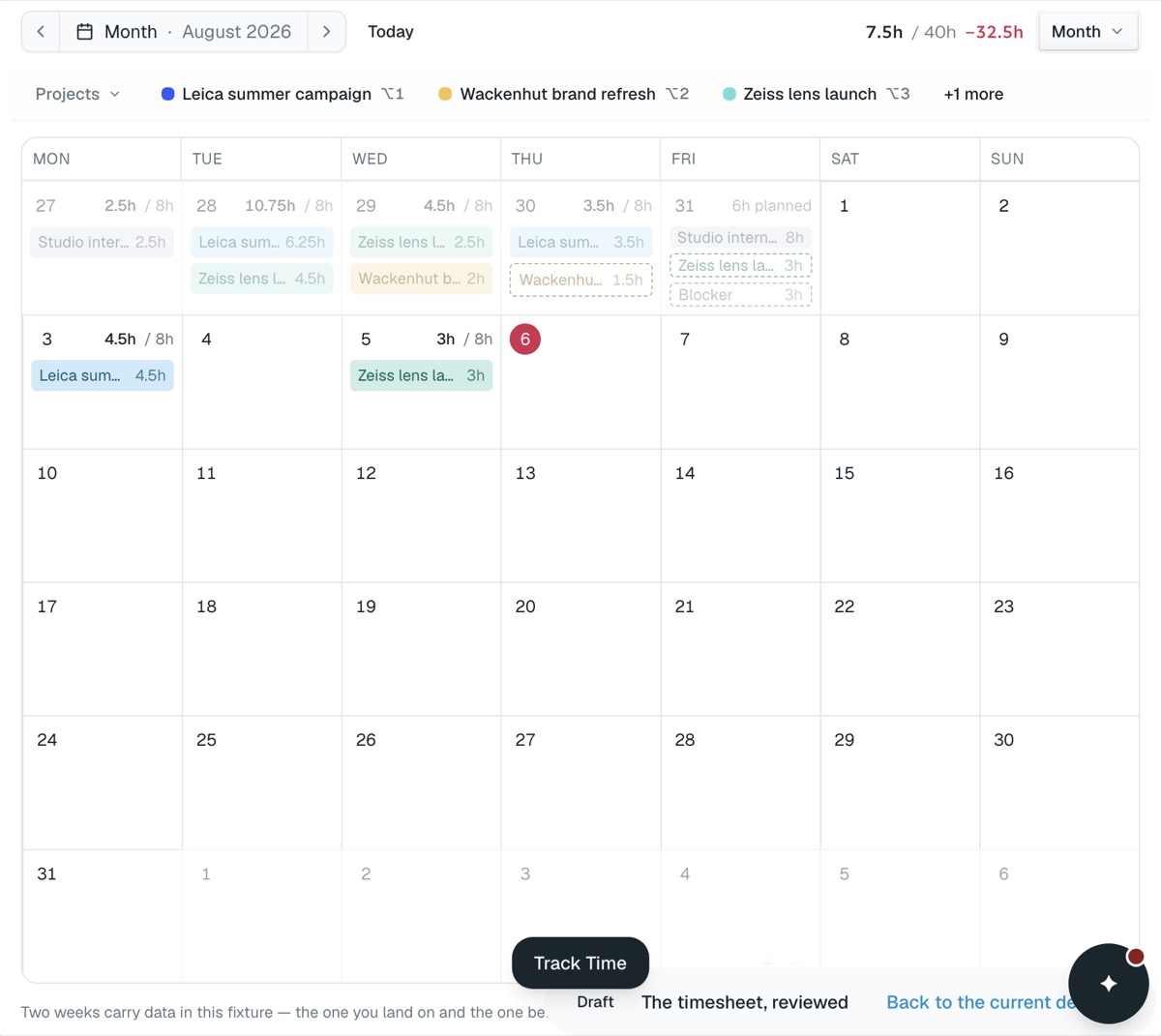
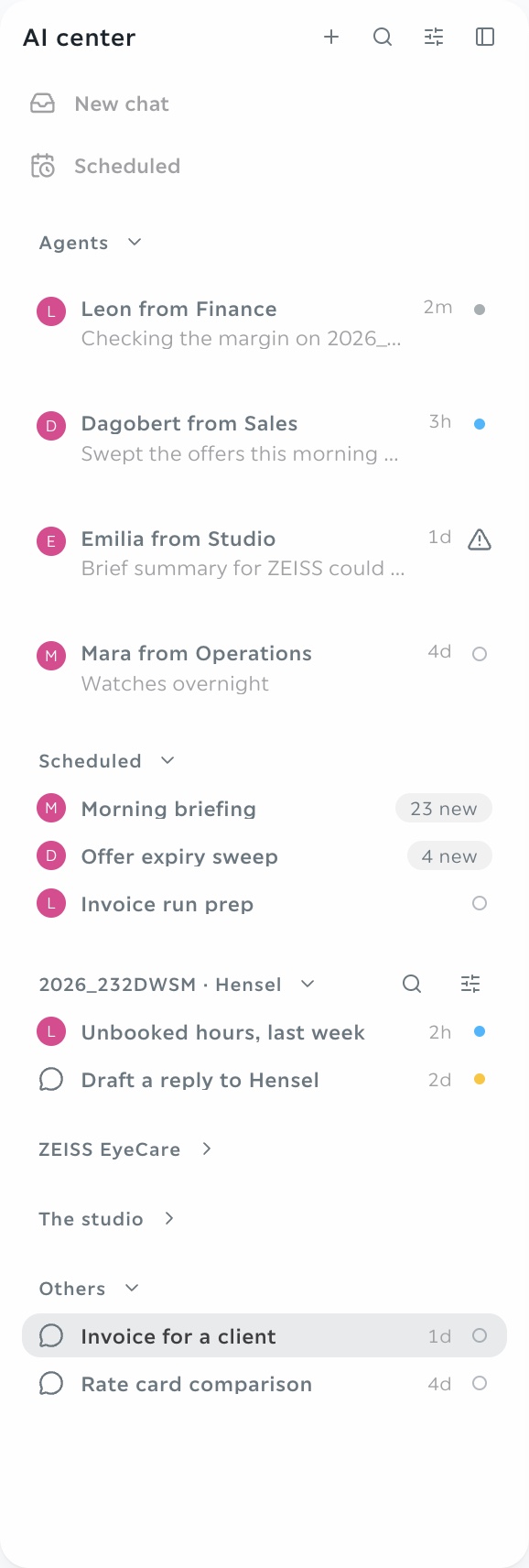

Decisions about hiring, pricing and which clients to keep get made on figures assembled weeks after the period closed. By then the next quarter is half committed. troi keeps the same figures current as the work happens, so a direction can still be changed while changing it means something.
How it works
troi rolls every recorded hour, booked cost and invoice up from the project to the client, the service line and the company. You ask the question by client, by service, by period or by team, and the same data answers each cut. Every figure opens back down to the entry it came from, with who recorded it and when.
Every hour recorded in time tracking, every booked cost and every invoice rolls up from the project to the client, the service line and the company.
By client, by service, by period or by team. The same data answers each cut.
Every figure opens back down to the entry it came from, so a number in a board pack has a record behind it.
An example
Retainers look like the strongest line at €412,000 of revenue. Against 2,960 recorded hours at an average cost of €96, the contribution is €127,840, which is 31 per cent, below project work at 38. troi shows that before the next retainer is priced, not after the year closes.

01 · Recorded in projectsHours, costs, invoices
03 · Opened back downTo the entry behind it
04 · The next estimate
It rolls the same records the projects run on up to client, service line and company level, so decisions about pricing, hiring and which clients to keep rest on current figures rather than on a quarter that has already closed.
Yes. Revenue, contribution and margin can be read by client, by project and by service line, over any period, and compared against each other.
They move with every entry. A recorded hour, a booked cost or an issued invoice updates the figures behind it, without an export or a reconciliation step.
Yes. Committed work sits next to available capacity per period, so a gap shows before anyone commits to new work.
Yes. Every aggregate opens down to the entries behind it, with who recorded them and when, so a number can be explained rather than defended.
Core is available now, from €9.95 a month. Intelligence, Performance and Enterprise follow, each with everything before it.
See pricing